Complete One Piece TCG Rules

This guide organizes the official rules into a clear, step-by-step reference. It is meant to be a complete reference that stays precise and avoids interpretation. The goal is clarity: every section maps to official rule topics such as card information, zones, deck building, turn structure, combat steps, effect timing, and keyword definitions. If you want the shorter, beginner-friendly version, use the Simplified Rules Overview page.
When you read these rules, remember two fundamentals stated in the official comprehensive rules: if a card text contradicts the rules, the card text takes priority, and if an action is impossible, you perform as much of it as possible. This page keeps those priorities front and center. It also includes official keyword explanations so you can resolve timing windows and effects correctly during play.
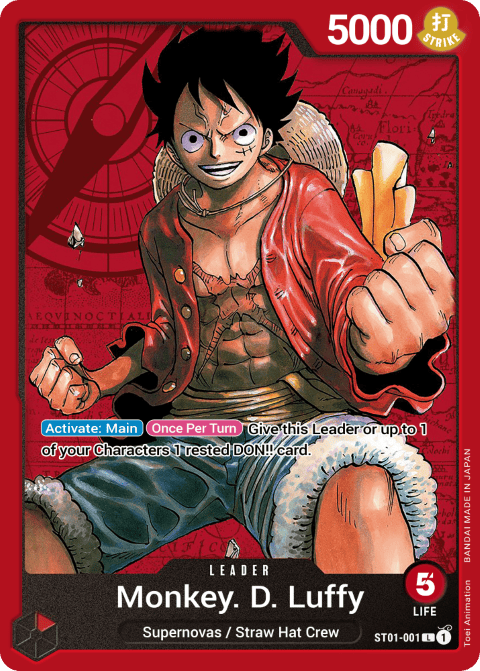
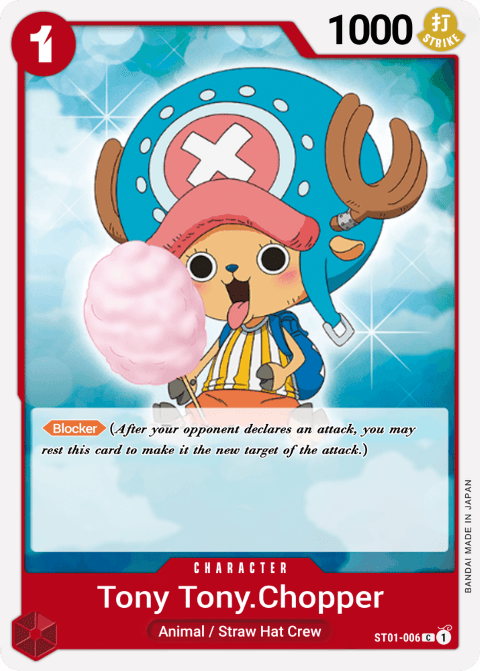
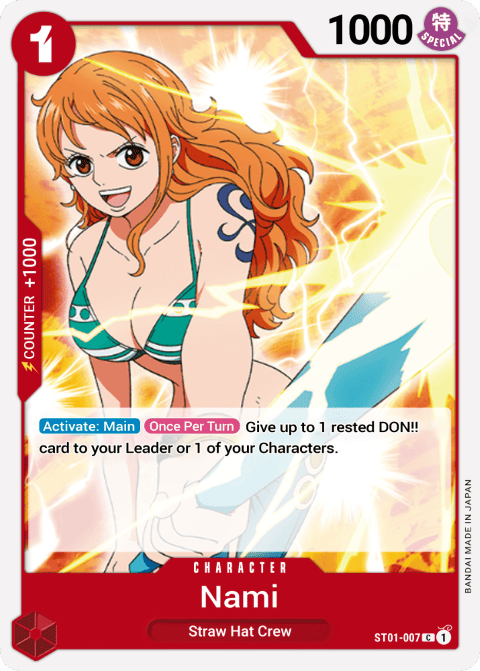
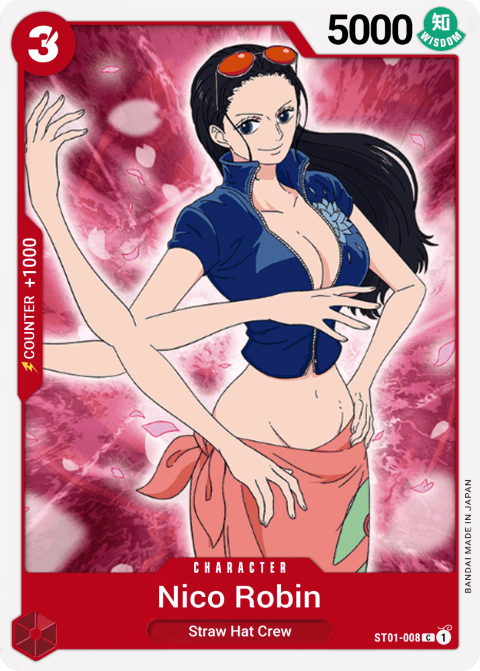
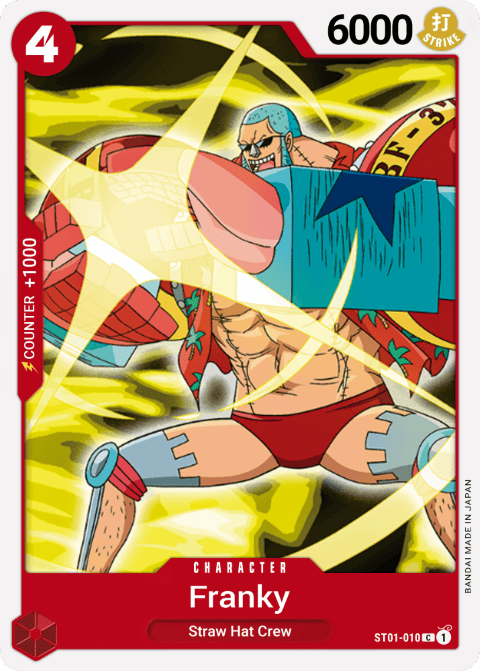
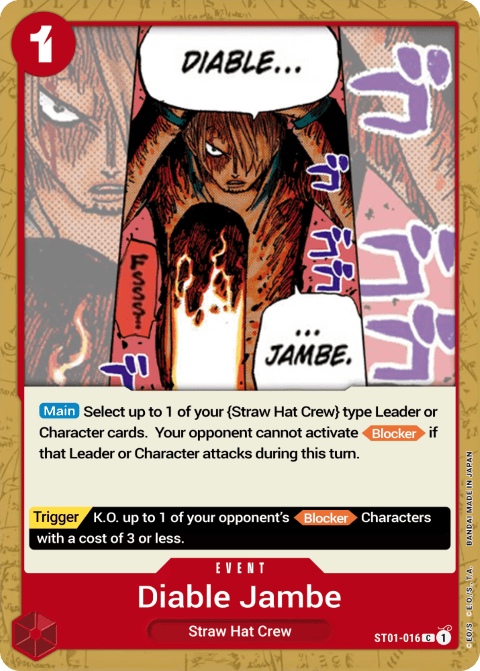
Card images and the board layout below are provided only as visual references and do not change any rules. For strategy or deck construction advice, use Deck Guides or Meta Analysis.
Game Overview and Win Conditions
- The game is designed for two players, head-to-head.
- You win if your opponent has no Life cards and their Leader takes damage.
- You win if your opponent’s deck reaches 0 cards.
- Players may concede at any time. A concession is immediate and cannot be prevented or replaced by card effects.
- Some card effects can directly cause a player to win or lose when the effect resolves.
Core Rules Principles
- If a card text contradicts the comprehensive rules, the card text takes priority.
- If an action is impossible, it is not performed. If only part of a multi‑step action is possible, perform as much as possible.
- If both players must choose simultaneously, the turn player chooses first.
- When a rule or effect asks for a number, it must be an integer ≥ 0 unless stated otherwise.
Cards and Card Information
Card Types
Common Card Information
- Cost: number of DON!! to pay when playing or activating.
- Power: used to compare in battle; higher power wins.
- Attribute, color, card type, name, card number, rarity, and block symbol.
- Effects: special abilities described by the card text.
- Trigger effects: some cards can be activated when revealed from Life.
Board Layout
This sample board follows the real One Piece Card Game playmat structure so players can clearly see where each zone is placed.
- You can play up to 5 Character cards.
- Characters cannot attack on the turn they were played.
- Character Area: This is where you play Character cards. You can have up to 5 Characters on the field at a time.
- Leader Card: This is where you place your Leader card.
- Stage Card: This is where you play your Stage card. Each player can have only one Stage card on the field at a time.
- Deck: This is where you place your deck and draw cards from.
- Trash: This is where you place K.O.'d Characters and used cards.
- Cost Area: This is where you place DON!! cards. Use the cards here to pay costs or power up for battle.
- DON!! Deck: This is where you place your DON!! deck. It contains exactly 10 DON!! cards.
- Life Cards: This is where you place your Life cards.
Zones and Play Area
- Character Area: where your Characters are placed.
- Leader Area: where your single Leader is placed face up.
- Stage Area: where a single Stage can be placed.
- Deck: your main deck.
- Trash: where KO’d Characters and used Events go.
- Cost Area: where DON!! cards are placed.
- DON!! Deck: separate deck of DON!! cards.
- Life Area: face‑down cards equal to your Leader’s Life value.
Leader, Character, Stage, and Cost areas together are called the “field.”
Deck Construction Requirements
- 1 Leader card.
- Main deck of 50 cards (Characters, Events, Stages).
- DON!! deck of 10 DON!! cards.
- Your main deck may include only colors shown on your Leader.
- No more than 4 cards with the same card number in the main deck.
- Multi‑color cards count as all their listed colors at the same time.
Game Setup
- Shuffle your deck and place it in the Deck area.
- Place your Leader face up in the Leader area.
- Decide the first player by rock‑paper‑scissors; the winner chooses to go first or second.
- Draw 5 cards.
- Each player may mulligan once: return all hand cards to the deck, shuffle, and draw 5.
- The first player decides first whether to mulligan.
- Place Life cards equal to your Leader’s Life value from the top of your deck, face down.
- The first player begins the game.
- You can play up to 5 Character cards.
- Characters cannot attack on the turn they were played.
Turn Structure
1. Refresh Phase
- Set all rested cards to active (upright).
- Return all given DON!! cards to the Cost area in active position.
2. Draw Phase
- Draw 1 card. The first player does not draw on their first turn.
3. DON!! Phase
- Place 2 active DON!! from the DON!! deck into the Cost area.
- If only 1 DON!! remains, place 1.
- The first player places only 1 DON!! on their first turn.
4. Main Phase
- Play Character cards.
- Play Stage cards.
-
Activate Event cards with
 .
.
- Activate card effects.
- Give DON!! cards.
- Attack and resolve battles.
5. End Phase
- Resolve “End of your turn” effects, then your opponent’s end‑of‑turn effects.
- End effects lasting “for the turn.”
- Pass the turn to the opponent.
Main Phase Actions in Detail
Playing Characters
- Place the Character in the Character area active, then pay its cost.
- You may have up to 5 Characters. To play a 6th, discard a Character you control.
Playing Stages
- Place the Stage active, then pay its cost.
- Only 1 Stage can be controlled; to play a new one, discard the current Stage.
Activating Events
-
Play an Event from your hand and pay its cost to activate its
effect.
- After resolution, the Event is placed in the trash.
Giving DON!!
- Move 1 active DON!! from the Cost area to a Leader or Character as “given.”
- Each given DON!! grants +1000 power during your turn.
- You may give DON!! any number of times while you have available DON!!.
Combat Procedure
- Attacks cannot be declared on the first turn of the game.
Step 1: Declare Attack
- Rest a Leader or active Character to declare an attack.
- Choose a target: opposing Leader or a rested opposing Character.
- Resolve effects that trigger “when attacking.”
Step 2: Block Step
-
The defending player may activate a
 to redirect the attack.
Step 3: Counter Step
-
The defending player may activate
 effects in any order.
-
They may discard Characters with Counter values or play Event cards with
.
Step 4: Damage Step
- Compare attacker power vs defender power.
- If attacker power is greater or equal, the attacker wins.
- Leader attacked: Leader takes 1 damage (or more if effects specify).
- Character attacked: that Character is KO’d and placed in the trash.
- If attacker power is lower, the attacker loses and nothing happens.
Step 5: End of Battle
- Resolve effects that trigger at end of battle.
- End any effects that last “for the battle.”
Life Damage and Trigger
- When your Leader takes damage, take the top Life card without showing it.
-
If the Life card has a
 ,
you may reveal it and activate that Trigger instead of adding it to your hand.
,
you may reveal it and activate that Trigger instead of adding it to your hand.
-
You may choose not to activate ,
in which case you add the Life card to your hand without revealing it.
- If multiple damage is dealt, repeat this process for each damage.
Rested and Active, Paying Costs
- Cards are normally played upright (active).
- After attacking or blocking, a card becomes rested (horizontal).
- To pay a cost, rest the required number of active DON!! in your Cost area.
Effect Order and Simultaneous Effects
- If a player has multiple effects that trigger at the same time, that player chooses the order.
- If both players have effects at the same time, the turn player resolves theirs first, then the opponent.
DON!! When a Character Leaves the Field
- If a Character with given DON!! leaves the field (KO or returned to hand), those DON!! are rested and returned to the Cost area.
Keyword Effects (Official Labels)
 : a Character can attack on the turn it is played.
 : deal 2 Life damage instead of 1 when this card damages a Leader.
 : Life cards damaged by this card go to the trash instead of the hand; Trigger does not activate.
- : during the Block Step, rest this card to make it the new attack target.
- : when a Life card with this label is taken as damage, you may reveal it and resolve its effect instead of adding it to hand.
Keywords (Official Labels)
- KO: a Character that loses a battle or is discarded by an effect.
 : effect can be activated during your Main Phase outside battle.
- : Event effect that can be activated during your Main Phase outside battle.
- : Event effect that can be activated during the opponent’s Counter Step.
 : effect window is when you declare an attack.
 : effect window is when the card is played.
 : effect window is the End Phase of your turn.
 : effect window is the End Phase of your opponent’s turn.
 : condition met when the card has been given at least X DON!!.
- DON!! -X: return a total of X DON!! from your Leader, Character, and Cost areas to the DON!! deck.
 : condition is met during your turn.
- : condition is met during the opponent’s turn.
 : effect can resolve only once each turn for that card.
- Discard: choose a card from hand and place it in the trash.
 : effect window is when you activate Blocker during the Block Step.
 : effect window is after the opponent declares an attack.
 : effect window is when this Character is KO’d and the effect resolves while it is in the trash.
Rule Processing and Defeat
- Rule processing resolves immediately when a relevant event occurs, even during other actions.
- A player who meets a defeat condition loses when rule processing occurs.
- Defeat conditions include taking Leader damage with no Life cards, or having no cards in deck.
Infinite Loops
- If an action loop would repeat indefinitely and no player can stop it, the game ends in a draw.